
Knee pain is one of the most common complaints in India. It affects office workers who sit for hours, runners and gym-goers, homemakers who climb stairs and squat many times a day, and older adults whose joints have worked for decades. It also raises a confusing question: is this just ageing, or something I should get checked?
This guide explains common causes of knee pain, simple things you can do at home, the warning signs that call for a doctor, what an X-ray can and cannot show and how to prepare for an orthopedic visit. It is general information and does not replace a medical examination.
The knee is the largest joint in the body and carries your weight with every step. It depends on bones, cartilage, ligaments, tendons, muscles and fluid working together. A problem in any one of these can cause pain, swelling, stiffness or a feeling that the knee may give way.
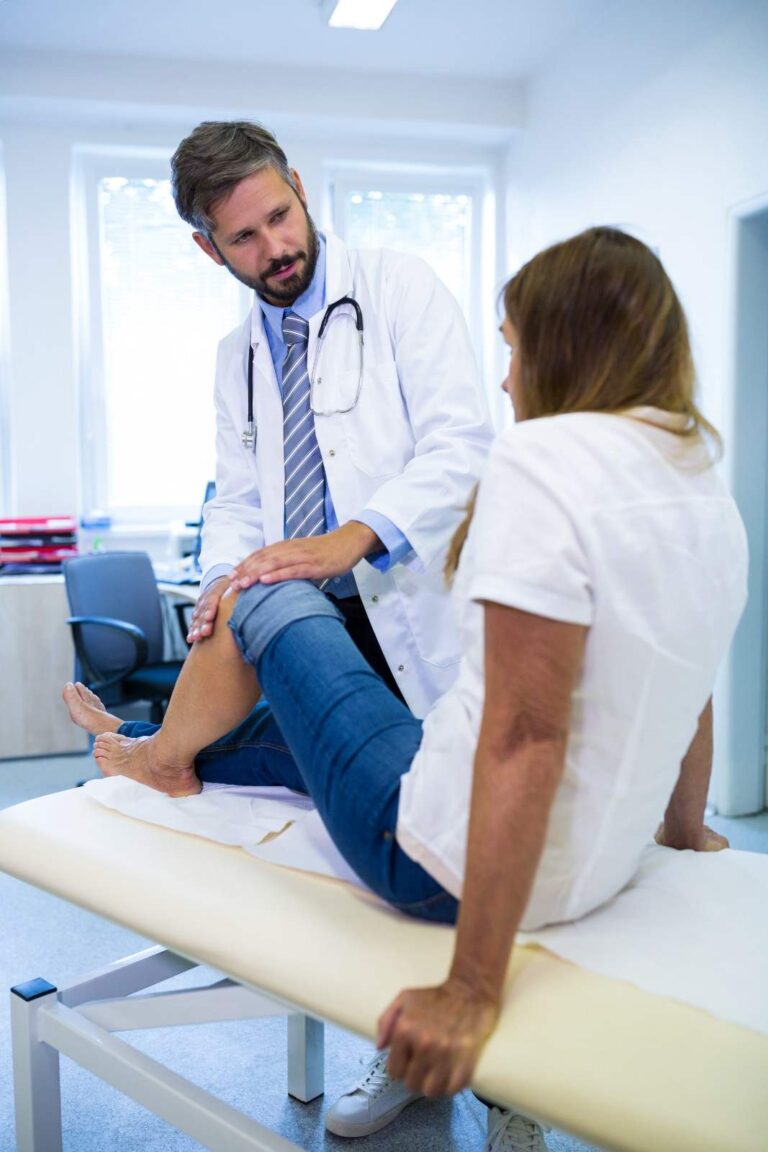
This is a gradual wearing of the cartilage that cushions the joint. It is common after the age of 40 to 50, and is more likely with excess body weight, previous injury or a family history. Typical signs are pain that is worse with activity, morning stiffness that eases within about half an hour, pain climbing stairs or standing up from a chair, and sometimes swelling or a grinding feeling.
A twist during sport, a fall or a sudden change in direction can injure ligaments or the cartilage pad between the bones. Signs include sudden pain, swelling within hours, a popping sensation, difficulty bearing weight, locking or catching, and a feeling of instability.
Running, cycling, climbing, repeated squatting or sudden increases in activity can irritate tendons and the tissues around the kneecap, causing pain at the front of the knee or just below it.
A knee that becomes suddenly hot, red, swollen and extremely painful may be due to an inflammatory condition, gout or infection. This needs prompt medical attention.
Sometimes pain felt in the knee comes from the hip or the spine. A doctor can examine the whole leg to find the true source.
For mild pain after a minor strain, these measures can help while you watch for improvement.
Avoid self-medicating for long periods. If pain medicines are needed regularly, speak to a doctor.
These can indicate a fracture, infection, blood clot or other serious problem, and need urgent medical care.
An X-ray is usually the first imaging test for knee pain. It shows bones clearly and can help detect fractures, arthritis changes such as reduced joint space, bone spurs, alignment problems and some bone abnormalities. It does not show soft tissues like ligaments, meniscus and tendons well. If a doctor suspects a soft tissue injury, they may suggest other scans, such as MRI.
X-rays are most useful when ordered for a reason, based on your history and examination. Not every knee pain needs one, so let your doctor decide.
For older adults, post-surgery patients or anyone for whom travelling is difficult, a home X-ray can be a practical option. White Glove Diagnostics lists Home X-Ray among its services. A doctor’s request is usually needed, and availability for specific views should be confirmed when you book.
Treatment depends on the cause and severity. It may include rest and activity changes, physiotherapy and exercise, weight management, supportive devices, medicines, injections in selected cases, and in some conditions surgery. Many people improve without an operation. Your orthopedic doctor will explain which options suit you.
White Glove Diagnostics in Kadri, Mangalore, offers orthopedic consultation along with diagnostic X-ray, home X-ray and blood tests, so evaluation and imaging can be done in one place. To book, call 91187 87911 or 824 796 2824, or visit whiteglovediagnostics.com.
When a doctor advises it based on your history and examination, for example after an injury, with persistent pain, swelling, deformity or difficulty walking. Not every knee pain needs an X-ray.
Not well. X-rays show bones clearly, but soft tissues such as ligaments and the meniscus usually need other scans such as MRI if your doctor suspects them.
It can be, particularly after 40 to 50, but other causes exist, such as kneecap problems or muscle weakness. A doctor can examine your knee and advise.
Cold packs are often used in the first day or two after a strain, while warmth may ease stiffness later. If swelling or pain is significant, ask your doctor.
White Glove Diagnostics lists Home X-Ray as a service. A doctor’s request is usually needed, and availability for specific views should be confirmed at booking.
No. Many knee problems improve with exercise, physiotherapy, weight management and other non-surgical measures. Your orthopedic doctor will advise on the best option.
Knee pain is common, but it should not be dismissed as just part of ageing. Mild pain often improves with simple care, while persistent or severe pain deserves an examination. Early advice protects your mobility for years to come. This article is general information and does not replace medical advice.
402/403, Indus business centre, Arya samaj Road , Kadri , Mangalore-575002 Karnataka , India
91187 87911 / 824 796 2824